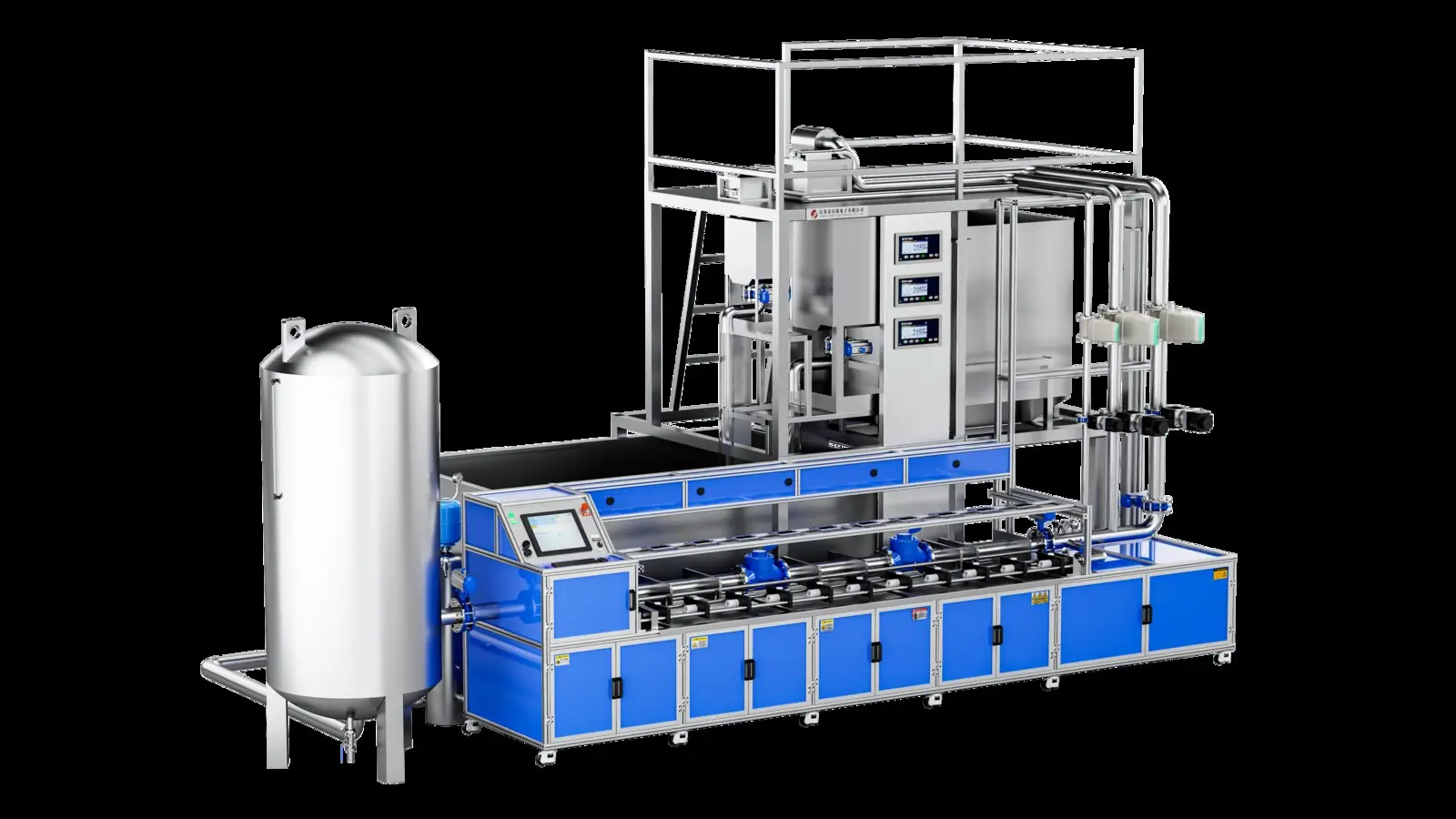

A practical guide to water meter testing equipment, measurement methods, pipeline configurations, and automation requirements.
Choosing the right automatic water meter test bench is an important decision for water meter manufacturers, quality control departments, and metrology laboratories. The right equipment should match the meters being tested, the required measurement method, the operating flow range, and the intended testing workflow.
However, not every water meter testing system is designed for the same application. Differences in nominal diameter, reference measurement method, pipeline layout, and automation level can affect the overall equipment configuration.
In this guide, KINMY explains seven key factors to consider when selecting water meter testing equipment, helping you define your requirements before requesting a customized solution.
Identify the Water Meter Types and Nominal Diameters
The first step is to determine which water meters the test bench needs to accommodate.
Water meter testing equipment can be configured for different nominal diameter ranges, from small-diameter meters to larger-diameter meters used in commercial and industrial applications.
Before selecting a system, identify:
- The nominal diameter range, such as DN15–DN25, DN15–DN50, DN15–DN100, or DN50–DN200
- The types of meters to be tested, including mechanical and electronic water meters, where applicable
- The number of meters to be tested in each batch
- The required test flow conditions
- The expected frequency of meter changeover
These requirements influence the pipeline arrangement, clamping mechanism, flow-control components, and overall test bench design.
A test bench designed for small-diameter meters should not automatically be assumed suitable for larger meters. Confirm the supported diameter range and configuration with the equipment manufacturer.
Select the Appropriate Measurement Method
The measurement method determines how the reference quantity is established and compared with the meter under test.
KINMY’s product range includes test bench configurations using different measurement methods, depending on the model and application.
Gravimetric Method
The gravimetric method determines the mass of collected water using a weighing system. The corresponding water volume is calculated using the appropriate water-density value and relevant test conditions.
When evaluating a gravimetric-method test bench, consider the weighing system, collection arrangement, measurement procedure, and required operating range.
Reference Meter Method
The reference meter method compares the meter under test with a suitable reference meter.
The reference meter’s metrological performance, calibration status, measurement range, and installation conditions are important considerations when selecting this configuration.
Volumetric Method
The volumetric method determines water quantity using a known or calibrated volume, according to the system’s measurement procedure.
For a volumetric test bench, consider the measuring vessel’s capacity, the collection arrangement, and the testing workflow required for the intended application.
Piston Prover Method
Some water meter testing equipment uses a piston-based measurement arrangement. This is a distinct method and should be evaluated according to the specific equipment design and test procedure.
Important: These methods should not be treated as interchangeable. The appropriate choice depends on the required measurement performance, applicable testing procedure, meter specifications, and equipment configuration.
Define the Required Flow Range and Test Conditions
The test bench must support the flow conditions required for the meters being tested.
When requesting a quotation, provide the required flow range and relevant test points rather than relying only on the nominal diameter.
Engineers should also consider:
- Required test flow rates
- Flow stability under the specified operating conditions
- Water supply capacity and operating pressure
- Water temperature requirements
- Relevant measurement and timing functions
Flow stability is particularly important because changes in flow during a test can affect the measurement process.
The required performance should be assessed for the complete testing system and the intended operating conditions. Specifications from one equipment model should not be assumed to apply to another model.
Choose the Right Pipeline Configuration
Pipeline layout affects how meters are installed, how different sizes are accommodated, and how the testing area is organized.
KINMY’s technical materials describe several pipeline and equipment layout concepts.
Parallel Pipeline Arrangement
Separate test pipelines are arranged within a common testing area. This layout may be considered when the application requires multiple test lines within one system.
Rotary Arrangement
Test pipelines are arranged around a rotating structure. The arrangement can support changing between testing positions according to the equipment design.
Replaceable-Pipeline Arrangement
Different pipeline assemblies can be installed on a common test platform to accommodate the required meter configurations.
Independent Test-Bench Arrangement
Separate test units are configured for different meter sizes or testing applications.
The best layout depends on the number and size of the meters, available floor space, changeover requirements, maintenance access, and production workflow.
When comparing test benches, evaluate the complete operating process rather than the physical layout alone.
Determine the Required Level of Automation
An automatic water meter test bench can integrate multiple operations into a coordinated testing process.
Depending on the model, its functions may include:
- Automated test sequencing
- Flow adjustment and control
- Meter clamping
- Sensor signal acquisition
- Timing and measurement functions
- Test result processing and recording
- Touchscreen operation
Automation can help reduce repetitive manual operations and organize testing procedures. It can also support more consistent workflows when the equipment and test procedure are properly configured.
However, automation alone does not guarantee measurement accuracy. Reference instruments, installation conditions, flow stability, and measurement procedures remain important.
Before purchasing equipment, distinguish between standard functions and optional or customized functions. Ask the manufacturer to confirm which operations are automated in the proposed configuration.
Consider Testing Capacity and Production Workflow
For water meter manufacturers, testing capacity is not determined solely by the number of meter positions.
The complete workflow may include meter installation, clamping, filling and air removal where applicable, flow stabilization, measurement, data processing, and unloading.
When evaluating a multi-position water meter test bench, consider:
- The number of meters tested simultaneously
- The time required for each testing sequence
- The number of test points required per meter
- Meter installation and removal time
- Changeover time between meter sizes
- Operator involvement and data handling
A multi-position design may help organize batch testing, but actual throughput depends on the testing method, operating conditions, meter type, number of test points, and equipment configuration.
For this reason, production capacity should be evaluated using the customer’s actual test requirements rather than a generic output figure.
Evaluate Calibration, Maintenance, and Technical Support
A water meter test bench is a measurement system, so its reference instruments and measurement components need appropriate calibration, verification, and maintenance.
Before finalizing the equipment specification, discuss:
- Calibration and maintenance requirements for reference instruments
- Access to key components for inspection and servicing
- Availability of technical documentation
- Operator training and commissioning requirements
- Software and data-recording requirements
- Technical support and spare parts
These considerations help customers evaluate the equipment throughout its service life, rather than focusing only on the initial purchase price.
The required calibration and verification arrangements should be determined according to the applicable procedures and the equipment’s intended use.
A Practical Checklist Before Requesting a Quotation
Use the following checklist to prepare your water meter testing equipment requirements.
Requirement Information to provide
Meter type Mechanical, electronic, or other specified meter types
Nominal diameter Required DN range
Measurement method Gravimetric Method, Reference Meter Method, Volumetric Method, or another specified method
Flow conditions Required flow range and test points
Testing capacity Number of meters per batch and expected workflow
Pipeline layout Parallel, rotary, replaceable-pipeline, or independent arrangement
Automation Required control, measurement, and data functions
Installation Available space, water supply, power, and other site requirements
Providing these details helps the equipment manufacturer evaluate the appropriate configuration and identify any additional technical questions before preparing a proposal.
How KINMY Develops Water Meter Testing Equipment
Jiangsu Kinmy Electronics Co., Ltd. develops water meter testing equipment and industrial automation solutions.
KINMY’s technical materials document the development of water meter testing equipment across multiple generations, including early automatic testing arrangements, multi-position equipment, and later designs incorporating sensor technology and integrated automation.
This development history reflects the importance of matching mechanical structure, measurement components, and control functions to the intended testing application.
KINMY’s product range includes water meter test benches for different nominal diameter ranges and measurement configurations. Depending on the project, equipment selection can take into account the required measurement method, pipeline layout, testing capacity, and level of automation.
For customers planning a new testing line or upgrading existing equipment, defining the application requirements is the first step toward evaluating a suitable solution.
Conclusion
Choosing an automatic water meter test bench involves more than selecting a nominal diameter range or a measurement method.
The right configuration should account for meter compatibility, reference measurement, flow conditions, pipeline layout, automation, production workflow, and long-term maintenance requirements.
By defining these factors before requesting a quotation, water meter manufacturers and metrology laboratories can compare equipment configurations more effectively and identify a solution that fits their actual testing needs.
Looking for water meter testing equipment for your production line or laboratory?
Contact KINMY to discuss your meter specifications, required measurement method, flow range, testing capacity, and automation requirements.
KINMY — Water Meter Testing Equipment and Industrial Automation Solutions.