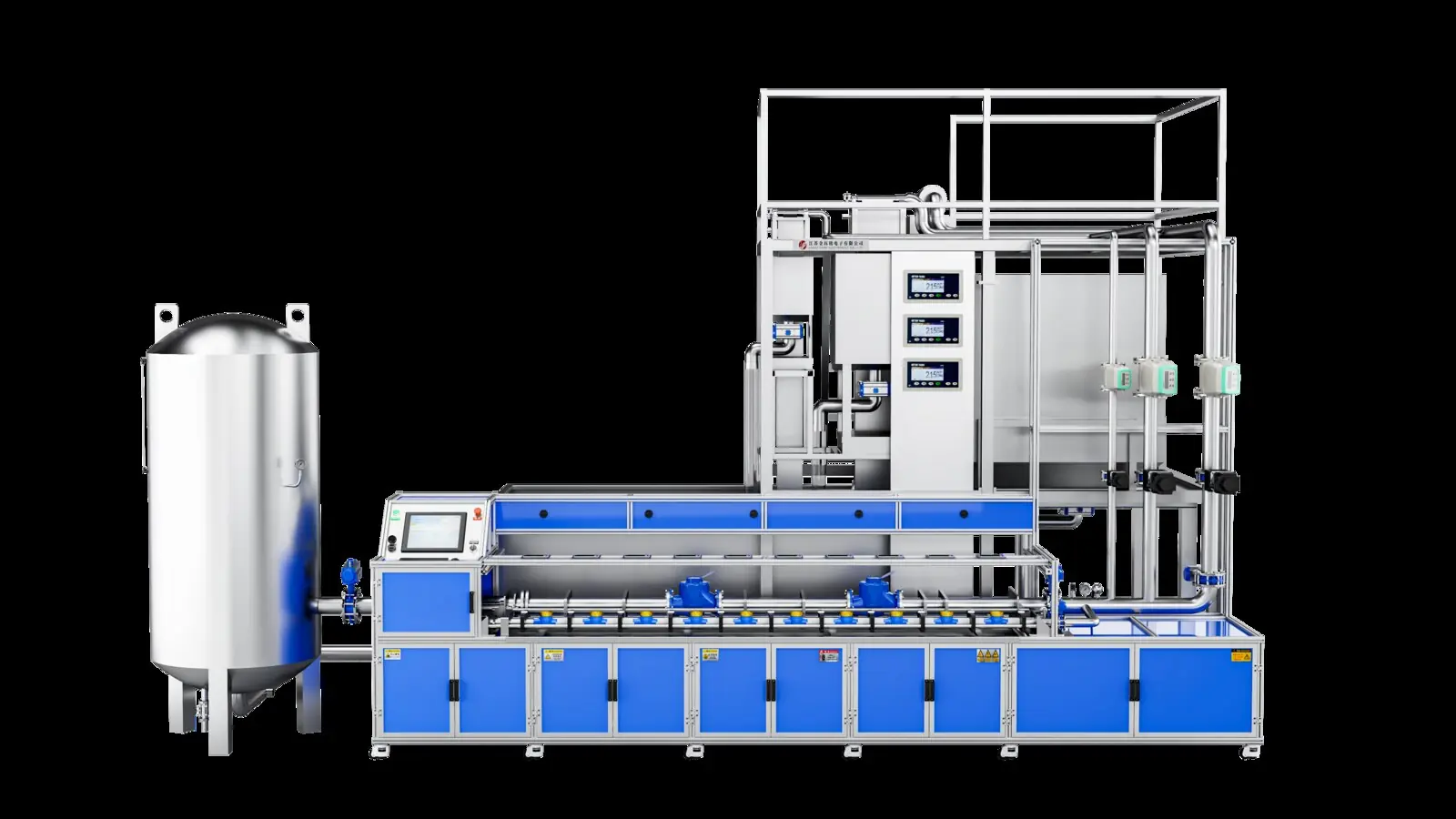
Water Meter Verification: Reference Measurements and Test Modes

A technical guide to water meter testing principles, reference measurement methods, and automatic test bench selection.
Water meter testing is an essential part of water meter manufacturing, quality control, and metrological evaluation. To assess a water meter’s measurement performance, a testing system must establish suitable flow conditions, obtain a reliable reference measurement, and compare the reference result with the meter’s indicated volume.
However, not all water meter test benches use the same measurement principle. Depending on the equipment design, a system may determine water quantity through mass measurement, compare readings with a reference meter, use flow measurement and elapsed time, or measure the collected volume in a calibrated vessel.
In this guide, KINMY explains four methods described in our technical materials and discusses how the measurement principle influences water meter test bench design, operating workflow, and equipment selection.
What Is a Water Meter Testing Bench?
A water meter testing bench is a system designed to evaluate water meter performance under defined test conditions.
A typical water meter testing system may include the following components:
- Water supply system: Provides the water required for testing and may incorporate pumps, a water tank, or pressure-stabilizing arrangements.
- Pipeline system: Connects the meters under test and establishes the required water flow path.
- Reference measuring equipment: Provides the reference quantity or measurement used to evaluate the meter under test.
- Flow control components: Help establish the required test flow conditions.
- Timing and data acquisition system: Records relevant measurements and supports the evaluation of test results.
The exact configuration depends on the testing method, meter type, nominal diameter, required test conditions, and intended application.
For manufacturers and metrology laboratories, choosing the right water meter test bench starts with understanding how the reference measurement is obtained.
Gravimetric Method: Determining Water Quantity by Weighing
The gravimetric method determines the mass of water collected during a test using a weighing system. The corresponding water volume can then be calculated using the appropriate water-density value and test conditions.
How does it work?
Water flows through the meter under test and is collected in a weighing vessel. The weighing system measures the collected water mass, which is used to determine the reference volume according to the applicable procedure.
Key equipment
A gravimetric-method water meter test bench may include:
- A weighing system and collection vessel
- A controlled water supply
- A test pipeline and meter-clamping arrangement
- Flow-control components
- Timing, data acquisition, and result-processing functions, as required by the system
What should engineers consider?
Water density and temperature are relevant when converting measured mass into volume. The weighing system, water collection process, and test procedure must also be suitable for the required measurement performance.
The gravimetric method is therefore not simply a matter of weighing water. Reliable results depend on the complete measurement chain and the way the test is performed.
Reference Meter Method: Comparing Against a Reference Meter
The reference meter method evaluates a water meter by comparing its indicated volume with the measurement obtained from a suitable reference meter.
The reference meter must have established metrological performance and be appropriate for the intended flow range and testing conditions.
How does it work?
Water passes through the test arrangement, and the meter under test is evaluated against the reference meter over the defined measurement interval. The difference between the readings is used to assess the meter’s indication error according to the applicable procedure.
Key equipment
A reference meter test bench may incorporate:
- A reference meter
- A pipeline connecting the reference meter and the meter under test
- Flow-control components
- Timing and measurement acquisition functions
- Software for recording and evaluating test results, depending on the configuration
What should engineers consider?
The quality of the result depends on the reference meter’s performance, calibration status, measurement range, installation conditions, and the stability of the test flow.
A reference meter should not be treated as an automatically error-free standard. Its suitability and performance need to be established for the intended application.
This method can be incorporated into an automated water meter testing system when the reference meter, hydraulic arrangement, and control process are designed for the required test conditions.
Time-Flow Method: Using Flow Rate and Elapsed Time
The time-flow method described in our technical materials uses a flow measurement and elapsed time to determine the water quantity passing through a test section.
The underlying relationship is:
Volume = Flow Rate × Time
This relationship applies when the flow rate is constant over the measurement interval. If the flow rate varies, the volume must be determined using the flow over time rather than simply multiplying one instantaneous flow-rate reading by the total test duration.
How does it work?
A flow-measuring instrument provides the relevant flow information, while a timing function establishes the measurement interval. The resulting water quantity is then used in the comparison with the meter under test.
Key equipment
Depending on the design, the system may include:
- A suitable flow-measuring instrument
- A timing system
- Flow-control components
- A test pipeline
- Data acquisition and processing functions
What should engineers consider?
The flow-measuring instrument must be suitable for the intended operating range and measurement requirements. Flow stability, instrument performance, timing, and the test procedure all influence the reliability of the result.
Reference measurement principles and test modes describe different parts of a test system. Gravimetric, volumetric and reference meter arrangements establish or compare the reference quantity. Timed flow measurement describes acquisition and calculation; its reliability depends on the calibrated flow reference and timing. Start-stop operation and flow diversion describe the measurement sequence. Specify these separately when comparing test benches.
Volumetric Method: Determining Water Quantity by Volume
The volumetric method determines the collected water quantity using a vessel with a known or calibrated volume.
In the terminology used in our technical materials, this method corresponds to determining water quantity by comparing the meter’s indicated volume with a reference vessel’s volume.
How does it work?
Water is collected in a suitable vessel during the test. The collected quantity is determined using the vessel’s calibrated capacity or other specified volumetric measurement procedure, and the result is compared with the meter under test.
Key equipment
A volumetric water meter test bench may include:
- A calibrated measuring vessel
- A water supply and test pipeline
- Flow-control components
- A suitable arrangement for collecting and determining water volume
- Timing and data acquisition functions, where required
What should engineers consider?
The vessel’s calibration, usable capacity, reading procedure, collection process, and test conditions all matter.
The method can be suitable for applications where direct volumetric measurement meets the test requirements. However, the practical design of the vessel, pipeline, and collection system affects the equipment’s size, operating workflow, and automation complexity.
Terminology note: The volumetric method should not automatically be treated as identical to every reference-vessel or standard-container procedure. The applicable method is determined by the actual equipment design and test procedure.
Comparison of the Four Water Meter Testing Methods
The following table summarizes the basic principles described above. It is a conceptual comparison, not a substitute for a specific test procedure or equipment specification.
| Approach | Reference or calculation | Engineering considerations |
|---|---|---|
| Gravimetric reference | Collected water mass converted to volume using water density | Weighing performance, temperature and collection sequence |
| Reference meter comparison | Meter indication compared with a calibrated reference meter | Calibration, flow range, installation and acquisition |
| Volumetric reference | Collected quantity compared with a calibrated volume | Vessel calibration, usable capacity and collection arrangement |
| Timed flow acquisition | Water quantity calculated from calibrated flow measurements over time | Flow variation, reference calibration, timing and data processing |
No method should be selected solely because it appears faster or less expensive. The appropriate choice depends on the required measurement performance, meter specifications, applicable procedure, production workflow, and total equipment requirements.
How the Testing Method Influences Water Meter Test Bench Design
The measurement principle is only one part of equipment selection. The hydraulic arrangement and operating workflow also need to match the application.
Pipeline configuration
Different meter sizes and testing workflows may require different pipeline arrangements. Common structural concepts include:
- Parallel pipeline arrangement: Separate test lines are arranged within the testing area.
- Rotary arrangement: Test pipelines are arranged around a rotating structure to support changes between test positions.
- Replaceable-pipeline arrangement: A common test platform accommodates different pipeline assemblies as required.
- Independent test-bench arrangement: Separate testing units are configured for different meter sizes or applications.
These are equipment layout concepts rather than measurement methods. The appropriate structure depends on meter dimensions, changeover requirements, available space, and the intended production process.
Automation and data acquisition
An automatic water meter test bench may integrate flow adjustment, sensor data acquisition, test sequencing, and result recording.
Automation can help organize repeated operations and reduce manual data handling. However, automation alone does not guarantee measurement accuracy. The reference system, flow conditions, installation, measurement components, and test procedure remain essential.
Production and laboratory requirements
A water meter manufacturer may prioritize repeatable production workflows, efficient meter changeover, and batch testing. A metrology laboratory may place greater emphasis on reference measurement, test procedure control, and result traceability.
These requirements should be defined before the equipment configuration is finalized.
How to Choose the Right Automatic Water Meter Test Bench
Before selecting an automatic water meter test bench, consider the following questions:
- Which meters need to be tested? Define meter types, nominal diameters, and relevant operating ranges.
- Which measurement method is required? Confirm the applicable procedure and reference measurement principle.
- What test points and flow conditions are needed? Define the required test conditions before selecting the hydraulic arrangement.
- What is the required testing capacity? Specify the number of meters per batch and the intended operating workflow.
- What level of automation is appropriate? Identify requirements for clamping, flow control, data acquisition, result processing, and reporting.
- What installation and maintenance conditions apply? Consider floor space, changeover access, maintenance needs, and operator workflow.
Providing this information helps equipment engineers evaluate a suitable system configuration instead of choosing a test bench based on one specification alone.
Conclusion: Match the Measurement Method to the Testing Requirement
Gravimetric, volumetric and reference meter arrangements provide different ways to establish or compare water quantity. Timing and flow acquisition must be considered alongside the selected reference arrangement.
Understanding these principles helps manufacturers and laboratories evaluate the reference measurement, pipeline arrangement, automation requirements, and operating workflow needed for their applications.
At KINMY Measurement Systems, we provide water meter testing equipment and configurable testing solutions for meter manufacturers, utilities, and metrology laboratories. Our product portfolio includes water meter test benches designed around different nominal diameter ranges and measurement methods.
If you are planning a new testing project, share your meter specifications, required test method, flow range, testing capacity, and automation requirements with our team.
Contact KINMY to discuss a water meter testing system configured for your application.